


27 Aug Ostia – Harbour city of Ancient Rome


The ancient Roman city of Ostia was situated at the mouth of the River Tiber, about 30 km (19 miles) west of Rome. Over the centuries, the coastline gradually shifted seaward as a result of sediment deposition. Today, Ostia Antica lies beside the Tiber, approximately 3 km (1.9 miles) from the present-day coastline.
Founded according to tradition as Rome’s first colony, Ostia initially served as a river port and played an important role in supplying Rome with essential goods, particularly grain. Its strategic importance was also considerable, especially in the early period, when it served as a naval base and helped protect access to the Tiber and the city of Rome.
The name Ostia derives from the Latin ostium, meaning “mouth”, referring to its position at the mouth of the Tiber. As Rome’s population and commercial needs grew, however, Ostia’s port facilities became increasingly inadequate. Under the emperors Claudius and Trajan, a much larger harbour complex was developed further north, at Portus, near present-day Fiumicino. Portus, from the Latin portus, meaning “harbour”, eventually became the principal maritime gateway for Rome.
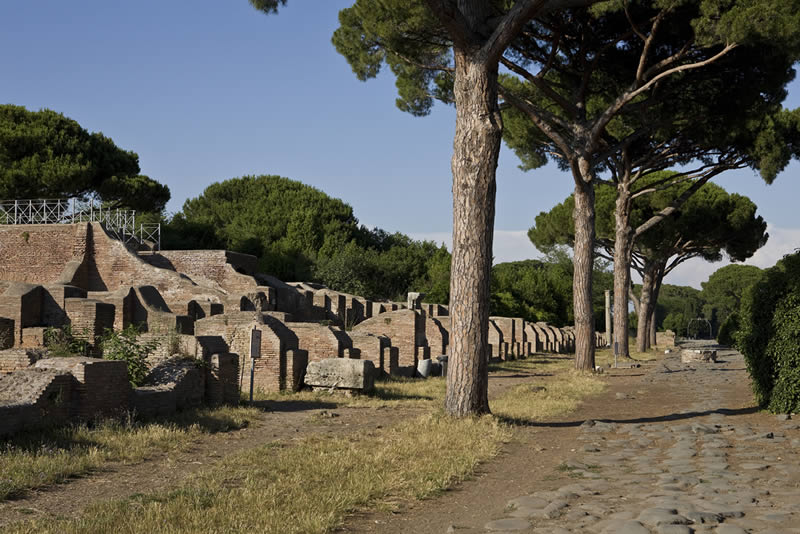
The extensive archaeological site of Ostia Antica is renowned for the exceptional preservation of its ancient urban fabric. Its streets, apartment buildings, houses, baths, temples, theatres, shops and warehouses, together with remarkable frescoes and mosaics, offer an unusually vivid picture of everyday life in the Roman world.
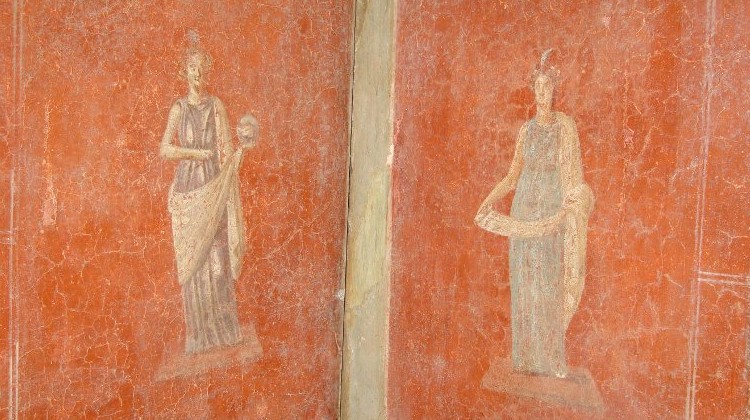
Insula of the Muses (fresco detail, room 5)
Getting There:
5 minutes’ walk from Hotel Columbia to Roma Termini Station. Take Metro Line B towards Laurentina and get off at Piramide. From Piramide, follow the signs to Roma Porta San Paolo Station, next to the metro station, and take the Roma–Ostia railway towards Cristoforo Colombo. Get off at Ostia Antica.
From Ostia Antica station, it is approximately a 9-minute walk, following the signs to the archaeological site entrance.
Address:
Scavi di Ostia Antica
Via dei Romagnoli 717
Ph +39 0656350215
official website
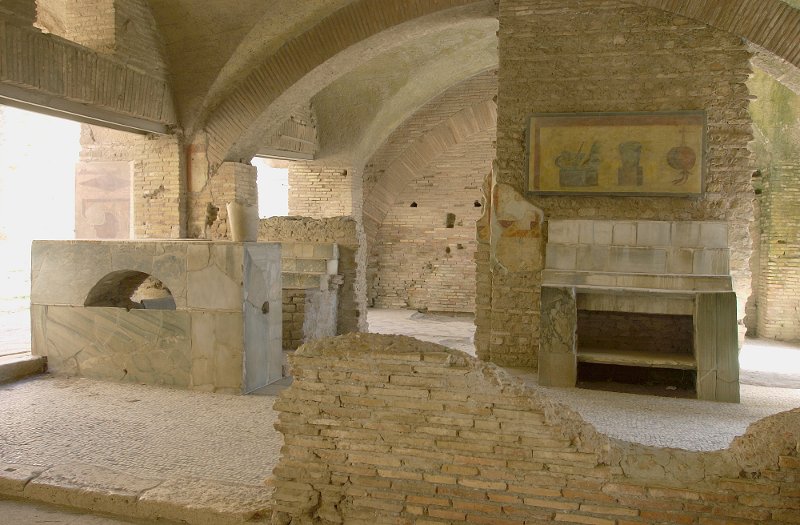
Thermopolium (central room)
Skip the queue:
Purchase and print the tickets in advance.
Go directly to the turnstiles without making the queue at the ticket office.
Tickets online
Current opening and admission prices can be viewed at the opening hours.
CLOSED: ON MONDAY, DECEMBER 25TH, JANUARY 1ST and MAY 1ST.
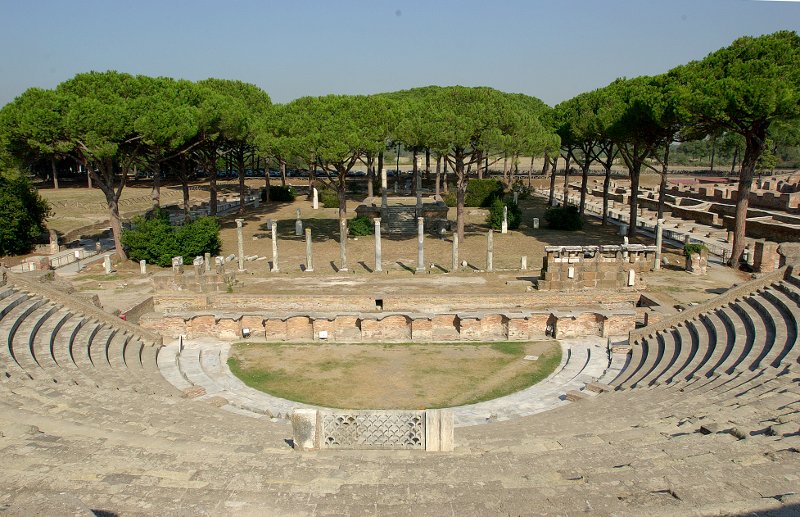
Theater
Where to eat:
CAFFETTERIA DEGLI SCAVI
inside the scavi area
Ph +39 0656350008

RISTORANTE IL MONUMENTO
outside the scavi area, you will not be able to enter again
Piazza Umberto I, 8
Ph +39 065650021
Baths of Neptune (entrance from the Decumanus Maximus)